Mostrando entradas con la etiqueta PROCESOS CONSTRUCTIVOS. Mostrar todas las entradas

21 abril, 2023

LOS TUKANO: ARQUITECTURA INDÍGENA EN COLOMBIA

Llegó a mis manos, de regalo, una revista publicada en el año 1962 en Colombia que es una joya. Se llama "Revista Escala  arquitectura, arte e ingeniería", la que yo he recibido es la edición de la revista Escala 16, el número dedicado a la Arquitectura Indígena: Los Tukano.

En ella se describen por escrito y gráficamente la ubicación y el entorno cercano, el desarrollo arquitectónico y constructivo de la comunidad, las tradiciones, el uso de los espacios, los materiales, etc.

Como introducción: Los Tukano son una comunidad Indígena que se localizaron cercanos al Río Vaupés en Colombia, en la frontera con Brasil. Dicha comunidad ha desarrollado diversas tipologías de vivienda realizadas con estructura de madera rolliza, corteza, y barro. Las cubiertas están realizadas en su totalidad por hojas de palma trenzadas. 

En las próximas entradas quiero mostrar esa documentación tan valiosa y tan bien dibujada que aparece en esta publicación.


30 abril, 2021

CORTE EN LATILLAS DEL BAMBÚ

El corte en tiras o latillas de la caña de bambú es una técnica muy tradicional que se utiliza desde siempre para realizar tejidos, bahareque, cortes mas flexibles, etc. En general se puede encontrar este tipo de corte en todas las culturas que tienen acceso al bambú como material autóctono. 

CUTTING BAMBOO STRIPS

Cutting bamboo cane into strips or strips is a very traditional technique that has always been used to make weavings, bahareque tecnic, more flexible cuts, etc. In general, this type of cutting can be found in all cultures that have access to bamboo as a native material. 

El corte se puede realizar de manera manual con cuchillas o con la sirra de estrella que permite cortar una caña en varias tiras a la vez. Actualmente se están realizando cortes de forma mecánica, con máquinas de corte láser también. 

Las cañas de bambú con rizomas leptomorfos facilitan los cortes en tiras por tener sus haces vasculares en vainas. Además las paredes mas finas de las cañas hacen el trabajo más simple también. Los bambúes del género Phyllostachys, muy comunes en Asia, se trabajan de forma habitual en tiras tanto para cestería como para construcciones tejidas, ya que tienen características muy buenas para estos usos. 

The cut can be done manually with blades or with the star cutter that allows to cut a cane in several strips at the same time. Currently, cutting is being done mechanically, with laser cutting machines as well.

Bamboo canes with leptomorphic rhizomes facilitate cutting into strips by having their vascular bundles in sheaths. In addition, the thinner walls of the canes make the work simpler as well. Bamboos of the genus Phyllostachys, very common in Asia, are commonly worked into strips for both basketry and woven constructions, as they have very good characteristics for these uses. 


Imágenes tomadas en Kerala, India.

11 septiembre, 2020

TEJIDOS DE JUNCO EN PERÚ RURAQ MAKI

REED WEAVES IN PERU RURAQ MAKI

Ruraq Maki - Artesanías Artesur de Grocio Prado, Dirección de Patrimonio Inmaterial Ministerio de Cultura, Perú.

 https://www.youtube.com/watch?v=mcwrulb_jtM

30 junio, 2020

KOKONAT BOWLS (El proceso: Los bowls_ parte 2)

Proceso para la obtención de bowls a partir del coco:
A la ONG llega directamente la cáscara desnuda y seca con la fibra de coco que lo recubre, ya que el resto ha sido anteriormente utilizado por las empresas para la obtención de aceite. 

KOKONAT BOWLS (The process: The bowls_part 2)

Process for obtaining bowls from coconut:
The NGO receives directly the bare and dried shell with the coconut fiber that covers it, since the rest has been previously used by the companies to obtain oil.


31 mayo, 2020

KOKONAT BOWLS (La materia prima: El coco_ parte 1)

Kokonat Bowls empezó en mayo de 2018 con la propuesta de dar una segunda vida a materiales naturales como el coco y el bambú para convertirlos en productos de menaje. Es un proyecto fundado por Antonio García Bolívar, y actualmente también trabajando Maia Pascual Bohnisch. En 2019 abrieron un taller en colaboración con la ONG Lokpanchayat en India que se centra entre otros objetivos en el desarrollo laboral de las mujeres. A través de este proyecto Sonali, Asha, Varsha y Shabnam recibieron un curso de formación para conocer el proceso desde la materia prima hasta el acabado último deseado de los bowls de coco. Esta formación duró poco más de una semana, haciendo pruebas de acabados y familiarizándose con las máquinas y herramientas (cortadora y pulidora). El objetivo de Kokonat bowls en India es seguir creando un impacto positivo para estas mujeres con las que están trabajando, y poder dar cada vez más trabajo a más mujeres, para que ellas puedan seguir empoderándose y conseguir la independencia económica para ellas y para sus hijos.


KOKONAT BOWLS  (The Raw Material: Coconut_Part 1)

Kokonat Bowls began in May 2018 with the proposal to give a second life to natural materials such as coconut and bamboo to make them into household products. It is a project founded by Antonio García Bolívar, and currently Maia Pascual Bohnisch is also working on it. In 2019 they opened a workplace project in collaboration with the NGO Lokpanchayat in India, which focuses on the development of women's work, among other objectives. Through this project Sonali, Asha, Varsha and Shabnam received a training course to learn the process from the raw material to the final desired finish of the coconut bowls. This training lasted just over a week, testing the finish and becoming familiar with the machines and tools (cutting and polishing machine). The aim of Kokonat bowls in India is to continue to create a positive impact for these women with who they are working on, and to be able to give more work to more women, so that they can continue to empower themselves and achieve economic independence for themselves and their children.

09 junio, 2019

GREEN BANANA PAPER I

En este video se puede conocer el trabajo que realizan en Micronesia con las fibras de banana. Esta es la primera entrada del blog que hago sobre el trabajo con las fibras de banana que realizan en Green Banana Paper.
Gracias Kosrae, Matt & the Green Banana team por querer formar parte de este blog!

In this video you can learn about the work they do in Micronesia with banana fibers. This is the first post of the blog I do about the work with banana fibers they do in Green Banana Paper.
Thank you Kosrae, Matt & the Green Banana team for wanting to be part of this blog!


08 mayo, 2019

CESTA CON BASE HEXAGONAL DE TIRA DE CASTAÑO

Hace unos día pude asistir a un curso con Carlos Fontales para realizar una cesta originaria de Japón. El tejido que utilizamos para la base fue hexagonal y para los bordes el tejido de lazo. La realizamos con tiras de castaño.

BASKET WITH HEXAGONAL BASE OF CHESTNUT STRIP
A few days ago I was able to attend a course with Carlos Fontales to make a basket from Japan. The fabric we used for the base was hexagonal and for the edges the ribbon fabric. We made it with chestnut strips. 

13 marzo, 2019

MuMu HOUSEWARE SUELOS DE BAMBÚ PARA EXTERIORES


Actualmente en China se están realizando suelos de bambú  Moso (Phyllostachys pubescens) para uso en exteriores.
Mediante un proceso industrial a partir de las fibras del bambú.

MuMu HOUSEWARE OUTDOOR LANDSCAPE BAMBOO DECKING
Moso Bamboo  (Phyllostachys pubescens) floors for outdoor use are currently being made in China.
By means of an industrial process from the bamboo fibres.


MuMu Houseware es una empresa China localizada en Fujian que utiliza fibra de bambú para producir suelos resistentes. 
El bambú es comprimido en máquinas que ejercen una presión de 2400 toneladas alcanzando asi productos de gran dureza, mucha densidad, anti-termitas. 
Este proceso hace que el azucar presente en la caña de bambú desaparezca evitando la posterior presencia de  hongos y microorganismos, mejora enormemente la resistencia al moho y la estabilidad dimensional.

MuMu Houseware is a Chinese company located in Fujian that uses bamboo fiber to produce strong flooring.
Bamboo is compressed in machines of 2400 tons reaching roducts of great hardness, very high density, anti-thermite.
This process makes that the sugar present in the bamboo cane disappears avoiding the later presence of fungi and microorganisms, improves enormously the resistance to the mold and the dimensional stability.

Fuente e imágenes / Source and pictures:
Cindy (Marketing Director )
MuMu houseware co., ltd 


30 enero, 2019

BaSE: CESTERÍA EN BANGLADESH

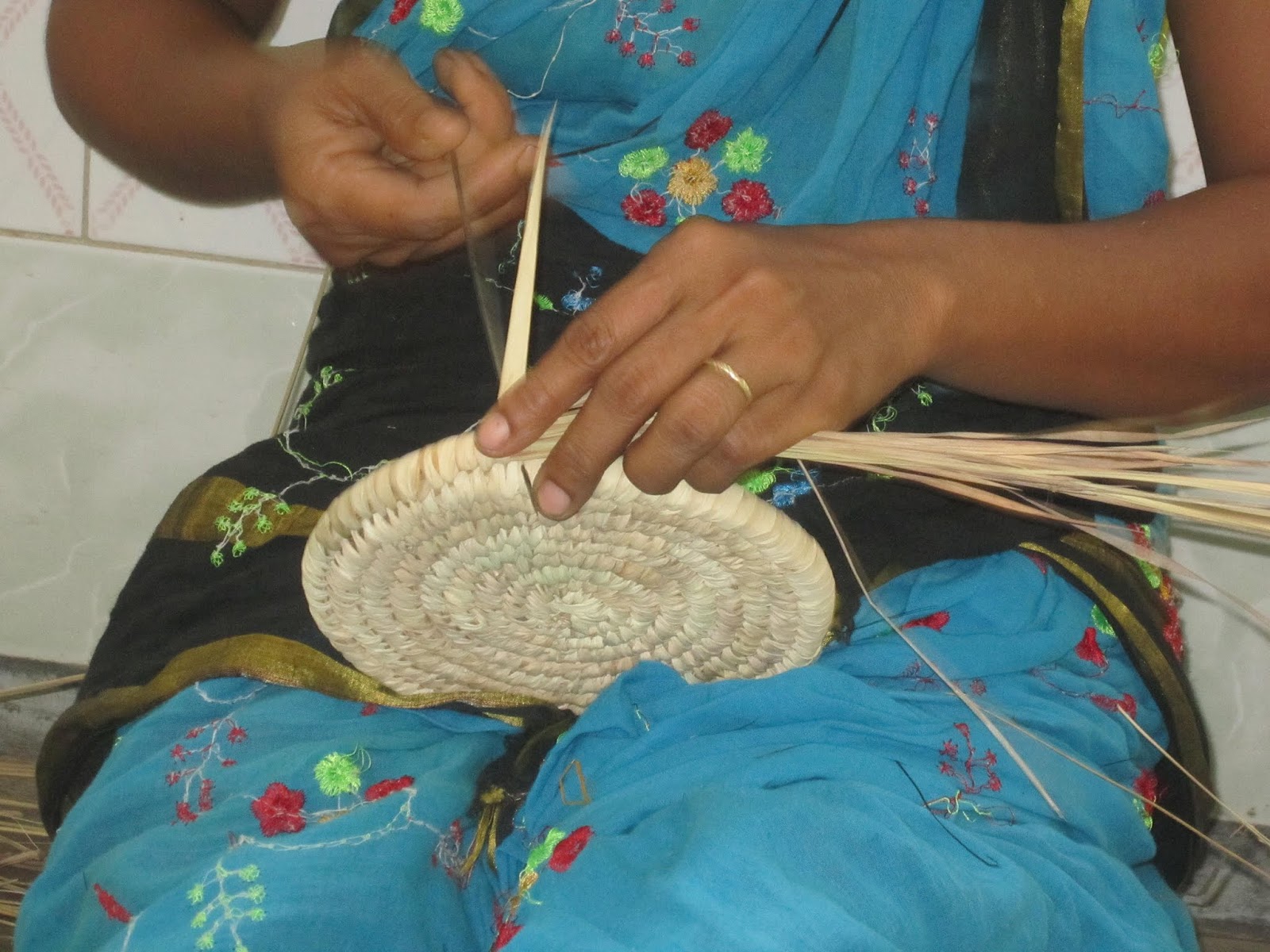
BaSE es una organización sin ánimo de lucro WFTO (World Fair Trade Organisation) Guaranteed Fair Trade (Organización Mundial de Comercio Justo Garantizado) compuesta por varios grupos de mujeres productoras, estos grupos producen varios tipos de artículos hechos a mano tales como cestería de hojas de palma, yute Macramé, bordados Nakshi, ropa y accesorios para mujeres. En total, más de 10.000 productores (el 99% son mujeres) organizados en 17 grupos de productores y con más de 3.000 productos. Son capaces de producir un gran número de artículos de diseño propio y pueden hacer diseños personalizables.

La misión de BaSE es permitir que las mujeres de Bangladesh tejan su dignidad, autoconciencia y autosuficiencia con sus propias manos y artesanía, inspiradas por sus tradiciones y su legado artesanal. Los productos se desarrollan a través de la oportunidad de trabajo, la educación y el apoyo a la salud de las familias, la capacitación de los recursos humanos. Los productos BaSE son 100% naturales, biodegradables y reciclables.

BaSE: BANGLADESH BASKETRY
BaSE is not for profit WFTO (World Fair Trade Organisation) Guaranteed Fair Trade organisation composed with various women producer groups, these groups producing various types of handmade items such as Palm-leaf Basketry, Jute Macramé, Nakshi Embroidery, Women Clothing and Accessories. Total over 10,000 producers (99% are women) organised in 17 producer groups and having over 3,000 products. They are able to produce the large numbers of own design items and able to do customizable designs.

BaSE mission is to allow the women of Bangladesh to themselves weave their dignity, self-consciousness and self-sufficiency with their own hands and craftsmanship, inspired by their traditions and handicraft legacy. Producer development through the working opportunity, education and health support for the families, capacity building of human resources. BaSE products are 100% Natural, Biodegradable, Recyclable.


04 enero, 2019

CARTOGRAFÍA VEGETAL

Los mapas cartográficos representan una de las formas de lenguaje mas primitivas que se conocen donde se podian representar rutas, vientos, oleajes, territorios, etc. Las primeras cartas para navegar fueron hechas con fibras vegetales utilizando palos de madera, bambú y otros materiales como arena, conchas o piedras. En algunos casos estos mapas fueron en clave secreta y se fueron pasando por generaciones como fue en el caso de las Islas Marshall (Micronesia). 

VEGETAL CARTOGRAPHY
Cartographic maps represent one of the most primitive forms of language known where routes, winds, waves, territories, etc. could be represented. The first charts to navigate were made with vegetable fibers using wooden sticks, bamboo and other materials such as sand, shells or stones. In some cases these maps were in secret key and were passed through generations as it was in the case of the Marshall Islands (Micronesia).
 
1

04 noviembre, 2018

BLOQUES DE CÁÑAMO Y OTROS ELEMENTOS CONSTRUCTIVOS (I)

El cáñamo es una de las fibras vegetales que se utilizó tradicionalmente para la realización de cuerdas de amarre, para refuerzos, para cerramientos y demás apoyo a los sistemas constructivos tradicionales, además de la cestería. 
Con el interés de conocer cómo se trabaja actualmente el cáñamo en elementos constructivos, tuve la oportuniodad de contactar con CANNABRIC, quienes realizan bloques de cáñamo entre otros productos para construcción.

HEMP BLOCKS AND OTHER CONSTRUCTION ELEMENTS (I)
The hemp is one of the vegetable fibers that was used traditionally for the accomplishment of ropes of mooring, for reinforcements, for enclosures and other support to the traditional constructive systems, besides the basketwork.
With the interest to know how the hemp works at the moment in constructive elements, I had the opportuniodad to contact with CANNABRIC, who realizes blocks of hemp among other products for construction.

28 septiembre, 2018

KOH PEN PUENTE DE BAMBÚ EN CAMBOYA

Este puente realizado con cañas de bambú se fue construyendo anualmente en las épocas que el clima lo permitía, en las épocas sin lluvias. Cruza el río Mekong en Kampong Cham. La particularidad de esta construcción es que cada año quedaba destruído por las fuertes lluvias y la subida de la marea y debía rehacerse cuando las lluvias cesaban.
Era uno de los puentes de bambú mas largos que se dejó de construir en 2017 sustituyendose por un puente de hormigón.

KOH PEN BAMBOO BRIDGE, CAMBODIA
This bridge made with bamboo reeds was built annually in the seasons that the climate allowed it, in the seasons without rains. It crosses the Mekong River at Kampong Cham. The particularity of this construction is that each year was destroyed by heavy rains and rising tide and had to be redone when the rains stopped.
It was one of the longest bamboo bridges not built in 2017 and was replaced by a concrete bridge.


30 julio, 2018

ANTIGUA HILANDERÍA DE ALGODÓN EN GANTE

VISITA AL MUSEO DE ARQUEOLOGÍA TEXTIL E INDUSTRIAL EN GANTE (BÉLGICA)
El MIAT es el antigua fábrica de hilados que funcionó durante el siglo XVIII en Gante. Actualmente se puede visitar y durante el recorrido se muestran las maquinarias y herramientas utilizadas desde la llegada del algodón, la materia prima, a la fábrica hasta la realización del hilado fino y el teñido de las fibras. 


 FORMER COTTON SPINNING MILL IN GENT
 VISIT TO THE MUSEUM OF TEXTILE AND INDUSTRIAL ARCHAEOLOGY IN GENT (BELGIUM)
MIAT is the oldest yarn factory that operated during the 18th century in Gent. At present it is possible to visit and during the tour you can see the machinery and tools used from the arrival of the cotton, the raw material, to the factory to the fine spinning and the dyeing of the fibres.  

25 mayo, 2018

CUBIERTA DE STIPA ICHU DE LA IGLESIA QATAY EN PERÚ


La cubierta de la Iglesia Qatay en el Distrito de Incahuasi (Perú) se renueva cada 10 años en un acontecimiento que reúne a todo el pueblo.
La Iglesia está construida por 5 muros gruesos de adobe y 28 columnas de madera talladas sobre el que descansa el techo de la cubierta a dos aguas con gran inclinación y manojos de paja Stipa Ichu que dan la terminación y el remate garantizando la impermeabilidad. La cubierta que sobre sale de los muros se sostiene por columnas de madera sin trabajar.
La cubierta esta formada por troncos principales de madera y palos secundarios generalmente de madera de aliso.

STIPA ICHU COVER OF THE QATAY CHURCH IN PERU
The roof of the Qatay Church in the District of Incahuasi (Peru) is renewed every 10 years in an event that brings together all the people.
The church is built with 5 thick adobe walls and 28 carved wooden columns on which rests the roof of the gable roof with a steep slope and bundles of Stipa Ichu straw that give the finish guaranteeing waterproofness. The roof above the walls is supported by unworked wooden columns.
The roof is formed by main wooden trunks and secondary sticks generally made of aliso wood.

27 abril, 2018

SAP ROLLER EN NORTE AMÉRICA

Se conocen como Sap Roller a los tejidos cilíndricos que fueron utilizados durante la Guerra Civil en Norte América, con los cuales se formaban trincheras y además se utilizaban como elementos de defensa.
Estos gaviones eran construidos con maderas locales con las que se realizaba el tejido mediante una trama y urdimbre. Eran formas cilíndricas que no tenían base, pero cuando se colocaban de forma vertical a modo de fortificación se los rellenaba con tierra y sacos de arena formando anchos muros de defensa. 

SAP ROLLER IN NORTH AMERICA
The cylindrical weaves that were used during the Civil War in North America, with which trenches were formed and also used as defence elements, are known as Sap Rollers.
These gabions were built with local woods with which the fabric was made by means of a weft and warp. They were cylindrical in shape and had no base, but when they were placed vertically as a fortification, they were filled with soil and sandbags forming wide defensive walls.

28 febrero, 2018

DETALLE CONSTRUCTIVO TRADICIONAL DE MADERA EN JAPÓN

La construcción en madera es tradicional en Japón. Tienen un gran desarrollo de los detalles constructivos, encuentros machimbrados donde sólo se utiliza la madera.

TRADITIONAL WOODEN CONSTRUCTION DETAIL IN JAPAN
Wood construction is traditional in Japan. They have a great development of the constructive details, machimbrados meetings where only wood is used. 


Fuente / Souce: : Video:  Publicado por Dorian Bracht
http://www.dorianbracht.com

28 enero, 2018

ISLAS FLOTANTES DE TOTORAS EN EL LAGO TITICACA

Las islas flotantes del pueblo Indigena Uros están construidas a 3810 msnm en el lago Titicaca que es compartido por Perú y Bolivia. Las Islas las construyen con totora (Scirpus californicus) que crece dentro del lago y es una fibra fuerte y habitualmente utilizada para la construcción de barcas o viviendas. Actualmente estas islas son de gran atractivo turístico y el paso de mas gente por allí hace que las islas requieran mayor mantenimiento.

FLOATING REED ISLANDS IN THE TITICACA LAKE
The floating islands of the Indigena Uros people are built at 3810 meters above sea level on Lake Titicaca, which is shared by Peru and Bolivia. The Islands build them with reed (Scirpus californicus) that grows inside the lake and is a strong fiber and usually used for the construction of boats or houses. Currently these islands are of great tourist attraction and the passage of more people through there makes the islands require more maintenance.
1
Las islas al estar construídas con un material orgánico tienen un proceso de desgaste y de cambios propios de su naturaleza y del uso, es por ello que el proceso constructivo en este caso es continuo. 
EL proceso constructivo de las islas flotantes se basa en la superposición de capas colocadas en direcciones contrarias creando un tejido trabado. Las islas flotan por las burbujas de aire, disminuyendo su densidad, que quedan entre el entretejido que se forma en medio de las totoras superpuestas. 
El proceso constructivo se puede describir en diferentes pasos y su ciclo está en continua renovación.

The islands, being built with organic material, have a process of wear and tear and changes in their nature and use, which is why the construction process in this case is continuous.
The constructive process of the floating islands is based on the superimposition of layers placed in opposite directions creating a locked weave. The islands float through the air bubbles, decreasing their density, which remain between the interweaving that forms in the middle of the superimposed totoras.
The construction process can be described in different steps and its cycle is in continuous renovation.

26 diciembre, 2017

BALSAS DE TOTORA EN EL LAGO TITICACA

En el lago Titicaca, que divide Bolivia y Perú, las plantas de totora (Schoenoplectus californicus) son fundamentales para el desarrollo de sus pueblos, ya que se utilizan para la construccion de viviendas, la construcción de nuevas islas, para artesanías, papel, para medicamentos, alimentación y para la construcción de barcas con métodos tradicionales.
Las barcas se utilizan para moverse por las islas, para pescar y para el turismo. La técnica constructiva es preincaica, valiéndose únicamente del atado de fibras vegetales como son la totora y la pita (Agave). 

REED BOATS IN TITICACA´S LAKE
In Titicaca´s Lake, which divides Bolivia and Peru, reed plants (Schoenoplectus californicus) are fundamental for the development of their villages, since they are used for the construction of houses, the construction of new islands, for crafts, paper, for medicines, food and for the construction of boats with traditional methods.
Boats are used for island travel, fishing and tourism. The construction technique is pre-Inca, using only the binding of vegetable fibers such as totora and pita (Agave).

26 noviembre, 2017

TRENZADOS INDUSTRIALES CON FIBRAS DE YUTE, VISITA A ESPARTOS SANTOS (II)

Los hilados y trenzados de yute se utilizan para formar las suelas de las alpargatas o esparteñas, por ejemplo. 
Para el proceso industrial se cuenta con uno o mas tipos de hilos de yute, dependiendo de las calidades que se busquen, ya que el trenzado se puede disponer de cuerdas que conformen el alma y cuerdas que configuren la parte externa. La técnica de trenzado de cuerda se utiliza para dar mas resistencia y generar una cuerda mas gruesa. 

INDUSTRIAL PLAITING WITH JUTE FIBRES, VISIT TO ESPARTOS SANTOS (II)
Jute yarns and plaiting are used to form the soles of espadrilles or esparteñas, for example.
For the industrial process, one or more types of jute yans are available, depending on the qualities being sought, since the braiding can be provided with ropes that conform the core and ropes that configure the outer part. The rope braiding technique is used to give more resistance and generate a thicker rope.  


26 octubre, 2017

VISITA A ESPARTOS SANTOS EN MURCIA (I)

Murcia es, tradicionalmente, la provincia de donde provenía la mayor cantidad de esparto e históricamente allí se encontraban las fábricas llamadas esparterías donde se trabajaba con estas fibras para trenzados, cordelería, etc. 
En Julio visité una de las pocas esparterías que sigue en funcionamiento y que amplió su trabajo  aumentando la variedad de fibras. En tres grandes naves se reparte el trabajo de Espartos Santos en Cieza (Murcia, España), allí José Antonio Santos me explicó el proceso de indusrtrialización que reciben las fibras. Actualmente reciben fibras de sisal desde Madagascar, Brasil, Kenia o Tanzania y de yute desde Bangladesh o India, también reciben esparto obtenido manualmente de algunas personas de la zona.

VISIT TO ESPARTO SANTOS IN MURCIA (I)
Murcia, Spain, is traditionally the province from which most straw originated and historically there were the factories called straw factories where these fibers were used for braiding, cordage, etc.
In July I visited one of the few remaining starw factories in operation that expanded their work by increasing the variety of fibers. In three large ships the work of Espartos Santos is divided up in Cieza (Murcia, Spain), where José Antonio Santos explained to me the process of industrialization that the fibers receive. Currently they receive sisal fibres from Madagascar, Brazil, Kenya or Tanzania and jute fibres from Bangladesh or India, as well as esparto obtained manually from some people in the area.